Search the Special Collections and Archives Portal

Search Results

Display    Results Per Page
Displaying results 15571 - 15580 of 17899

Sands Hotel Public Relations Records

Identifier
MS-00417
Abstract

The Sands Hotel Public Relations Records document the history of the Las Vegas casino and hotel from 1952 to 1977. It is comprised primarily of photographs, mostly 8x10 black-and-white prints, color prints, and transparencies. Most were produced by the Las Vegas News Bureau. Also included are newspaper clippings, brochures, press releases, and inter-office memos relating to the advertising and promotion department. Materials also include reels of 16mm film of the Sands opening, various shows and events including Frank Sinatra and Dean Martin's "Summit Meeting" performances with the Rat Pack, and footage from various television productions filmed at the Sands.

Archival Collection
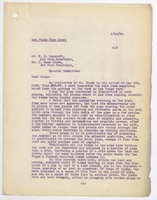
Letter to W. H. Bancroft and J. Ross Clark, May 18, 1908

Date
1908-05-18
Archival Collection
Description

An inspection of the pipeline showed that in many places, the asphalt was coming off the pipe and there were quite a few leaks. Maintenance would allow it to last perhaps a year longer, but then it would need to be replaced.

Text
Stewart family banking records and receipts

Date
1904 to 1948
Archival Collection
Description

Stewart family banking records and receipts

Text
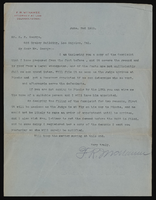
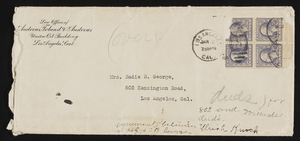
Correspondence, F.R. McNamee to H.E. George

Date
1905-06
Archival Collection
Description
This folder is from the "Correspondence" file of the Sadie and Hampton George Papers (MS-00434)

Text

Land contract

Date
1902-06-20
Archival Collection
Description
This folder is from "Legal Records" file of the Sadie and Hampton George Papers (MS-00434)

Text

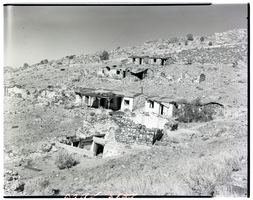
Film transparency of a ghost town, Delamar, Nevada, 1956

Date
1956
Description
A view of some of the abandonded buildings on a hillside in Delamar, Nevada. One of the structures has a covered porch Delamar, Nevada, nicknamed The Widowmaker, is a ghost town in central eastern Nevada, USA along the east side of the Delamar Valley. During its heyday, primarily between 1895 and 1900, it produced $13.5 million in gold. In 1889, prospectors John Ferguson and Joseph Sharp discovered gold around Monkeywrench Wash. A mining camp was then born west of the Monkeywrench Mine. It was called Ferguson. In April 1894, Captain Joseph Raphael De Lamar bought most of the important mines in the area and renamed the Ferguson camp as Delamar. In the same year, a newspaper called the Delamar Lode began publication and a post office was opened. Soon, the new settlement boasted more than 1,500 residents, a hospital, an opera house, churches, a school, several businesses and saloons. Most buildings were made of native rock. By 1896, the Delamar mill was handling up to 260 tons of ore daily. Water for the camp was pumped from a well in Meadow Valley Wash, some twelve miles away. Supplies and materials traveled even further, by mule team over mountainous terrain from the railroad head at Milford, Utah, which was 150 miles from Delamar. Silicosis The gold in the Delamar mines was embedded in quartzite which when crushed created a fine dust. Miners breathing the dust often developed silicosis and the town became known as a "widow-maker." Many ruins now stand semi-intact in the Delamar ghost town region. Foundations can easily be seen from adjacent hills. There are two graveyards, which have been vandalized. The area is honeycombed with mines and mineshafts, but in recent years the main shaft has been blasted closed. Wild horses roam the area. The nearby dry lake is known to pilots as Texas Lake because its outline resembles the state of Texas.

Image

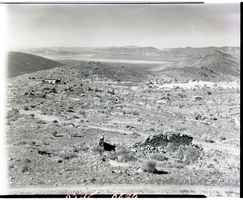
Film transparency of a ghost town, Delamar, Nevada, 1956

Date
1956
Description
A view of some of the abandonded buildings in Delamar, Nevada, taken from a nearby hill. Delamar, Nevada, nicknamed The Widowmaker, is a ghost town in central eastern Nevada, USA along the east side of the Delamar Valley. During its heyday, primarily between 1895 and 1900, it produced $13.5 million in gold. In 1889, prospectors John Ferguson and Joseph Sharp discovered gold around Monkeywrench Wash. A mining camp was then born west of the Monkeywrench Mine. It was called Ferguson. In April 1894, Captain Joseph Raphael De Lamar bought most of the important mines in the area and renamed the Ferguson camp as Delamar. In the same year, a newspaper called the Delamar Lode began publication and a post office was opened. Soon, the new settlement boasted more than 1,500 residents, a hospital, an opera house, churches, a school, several businesses and saloons. Most buildings were made of native rock. By 1896, the Delamar mill was handling up to 260 tons of ore daily. Water for the camp was pumped from a well in Meadow Valley Wash, some twelve miles away. Supplies and materials traveled even further, by mule team over mountainous terrain from the railroad head at Milford, Utah, which was 150 miles from Delamar. Silicosis The gold in the Delamar mines was embedded in quartzite which when crushed created a fine dust. Miners breathing the dust often developed silicosis and the town became known as a "widow-maker." Many ruins now stand semi-intact in the Delamar ghost town region. Foundations can easily be seen from adjacent hills. There are two graveyards, which have been vandalized. The area is honeycombed with mines and mineshafts, but in recent years the main shaft has been blasted closed. Wild horses roam the area. The nearby dry lake is known to pilots as Texas Lake because its outline resembles the state of Texas.

Image

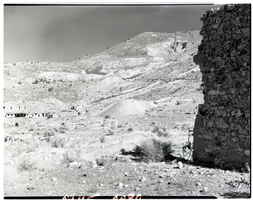
Film transparency of a ghost town, Delamar, Nevada, 1956

Date
1956
Description
Some of the abandonded buildings in Delamar, Nevada. A tailing pile from one of the mines is visible in the center of the photograph. A stone structure is visible on the right side of the photograph. Delamar, Nevada, nicknamed The Widowmaker, is a ghost town in central eastern Nevada, USA along the east side of the Delamar Valley. During its heyday, primarily between 1895 and 1900, it produced $13.5 million in gold. In 1889, prospectors John Ferguson and Joseph Sharp discovered gold around Monkeywrench Wash. A mining camp was then born west of the Monkeywrench Mine. It was called Ferguson. In April 1894, Captain Joseph Raphael De Lamar bought most of the important mines in the area and renamed the Ferguson camp as Delamar. In the same year, a newspaper called the Delamar Lode began publication and a post office was opened. Soon, the new settlement boasted more than 1,500 residents, a hospital, an opera house, churches, a school, several businesses and saloons. Most buildings were made of native rock. By 1896, the Delamar mill was handling up to 260 tons of ore daily. Water for the camp was pumped from a well in Meadow Valley Wash, some twelve miles away. Supplies and materials traveled even further, by mule team over mountainous terrain from the railroad head at Milford, Utah, which was 150 miles from Delamar. Silicosis The gold in the Delamar mines was embedded in quartzite which when crushed created a fine dust. Miners breathing the dust often developed silicosis and the town became known as a "widow-maker." Many ruins now stand semi-intact in the Delamar ghost town region. Foundations can easily be seen from adjacent hills. There are two graveyards, which have been vandalized. The area is honeycombed with mines and mineshafts, but in recent years the main shaft has been blasted closed. Wild horses roam the area. The nearby dry lake is known to pilots as Texas Lake because its outline resembles the state of Texas.

Image

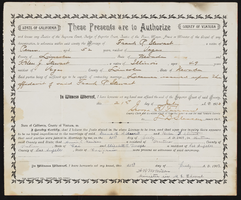
Marriage certificate of Helen and Frank Stewart and Tiza Stewart land patents

Date
1892 to 1929
Archival Collection
Description

Marriage certificate of Helen and Frank Stewart and Tiza Stewart land patents

Text

Nevada Resort Association Records

Identifier
MS-00815
Abstract

The records are comprised of subject files and reports from approximately the 1990s to the 2000s related to data gathering and lobbying activities of the Nevada Resort Association. Materials include drafts of legislation related to gaming, tax reports, health and safety regulations, labor and employment matters, and zoning issues.

Archival Collection