Search Results
Long Range Planning Study for Temple Beth Sholom, July 1988
This report provides the results of a study conducted by CITYWEST, Inc., to "determine whether the synagogue should remain in its current location and be renovated, remain in its current location and rebuild, or move." The report addresses leadership and staff development, as well as programming recommendations.
Text
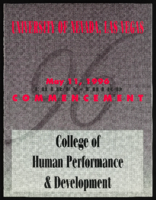
University of Nevada, Las Vegas (UNLV) College of Human Performance and Development 33rd commencement program
Commencement program from University of Nevada, Las Vegas Commencement Programs and Graduation Lists (UA-00115).
Text
Thiriot, Joseph, 1906-2009
Joseph Thiriot was born August 20, 1906 in Provo, Utah to George W. and Elvira Thiriot and was raised with four brothers. His father sold a “typing machine,” a forerunner to the typewriter. Eventually the family moved from Boise, Idaho to a ranch in Pahranagat Valley, Nevada, where the limits of educational opportunities compelled his parents to send him back to Provo to finish his education while living with family there. Gaining a teaching certificate enabled Thiriot to teach in rural Nevada.
Person
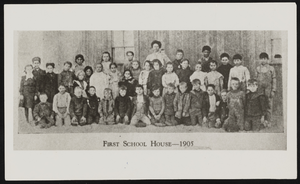
Las Vegas schoolhouse, Las Vegas, Nevada: photographic print
Image
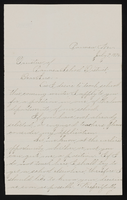
Application for teaching position from Mary Etta Syphus, Panaca, Nevada to Panaca School District, Panaca, Nevada
From the Syphus-Bunker Papers (MS-00169). The folder contains an original application for teaching position, a typed transcription of the same application, and a copy of original application attached.
Text
Liliam Lujan Hickey oral history interviews
Oral history interviews with Liliam Lujan Hickey conducted by Layne Karafantis on March 18, 2010 and March 25, 2010 for the Women's Research Institute of Nevada (WRIN) Las Vegas Women Oral History Project. Hickey begins her interviews describing growing up in Havana, Cuba in the 1930s, getting married at 16, and her life with her family in Cuba until they felt compelled to leave in 1960 to the United States. Hickey recounts her transition to American culture and moving to Las Vegas, Nevada in 1964. She then discusses marrying her second husband, Tom Hickey, and her campaign for the Nevada Board of Education. Hickey also talks about a Hispanic community organization she helped created, Circulo Cuban, which eventually merged into the Latin Chamber of Commerce. Finally, she discusses how the organization promotes Hispanic culture, and her work to improve education in Las Vegas, and other community activism.
Archival Collection

Transcript of interview with Elbert Edwards by Layne Covington, October 16, 1986
On October 16, 1986, Layne Covington interviewed Elbert Edwards (born 1907 in Panaca, Nevada) about his life in Southern Nevada. Edwards first talks about his family background before talking about what it was like to live in Panaca. He then talks about changes in Southern Nevada, particularly those in Boulder City that have taken place over time. Edwards later talks about the work of his wife and both of their political involvement and his involvement and career in education. The latter part of the interview includes discussion of the building of Boulder Dam, Edwards’ job as a registrar in the Selective Service, and the effects that the war years had on Las Vegas.
Text