
Search Results

Transcript of interview with Mary E. Habbart by Pamela Larkins, July 15, 1975
On July 15, 1975, Pamela Larkins interviewed Mary E. Habbart (born 1897 in Boothwyn, Pennsylvania) in her home in Las Vegas, Nevada. The two discuss Habbart’s personal family history and her family’s reasons for moving to Las Vegas. Habbart also describes social and economic changes to Las Vegas and her local dairy farm.
Text
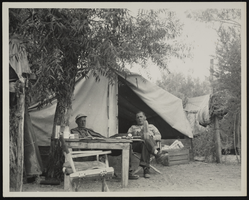
Kurt Fremstad and Ed Schroeder at a camp in Willow Beach, Arizona (identified from left to right): photographic print
Image
University of Nevada, Las Vegas Academic Council Records
The University of Nevada, Las Vegas (UNLV) Academic Council Records (1957-1984) document the meetings of UNLV's Academic Council, formerly known as the Academic Committee. Materials include four volumes of Academic Committee meeting minutes and nine volumes of Academic Council meeting minutes, agendas, correspondence, and announcements dealing with course schedules, tenure and promotions, budgets, and other administrative topics.
Archival Collection

June Monroe and Kazuko Atomura oral history interview: transcripts
Oral history interviews with June Monroe and Kazuko Atomura conducted by Cecilia Winchell and Stefani Evans on July 14 and July 19, 2022 for Reflections: the Las Vegas Asian American and Pacific Islander Oral History Project. In the first interview, Kazuko Atomura describes her childhood in Taiwan and Tokyo, Japan, and shares both happy and difficult mememories of that time. Atomura eventually moved to Los Angeles, California, where she reconnected with a man she previously met in Japan. She married him and together had their daughter, June Monroe, and another son while living in Corpus Christi, Texas. After difficult medical procedures involving Atomura's husband and Monroe's younger brother, Brian, the family relocated to Las Vegas, Nevada. Monroe recalls attending Las Vegas High School and Bonanza High School, and the struggle of making new friends as a young person. In the second interview, the mother and daughter discuss racism, discrimination, and identity. Kazuko Atomura recalls her many experiences with discrimination as a result of both her appearance and language barriers. June Monroe discusses how she came to be proud of her Japanese heritage, while Atomura discusses some of the community activities she has been involved in since living in Las Vegas including the Japanese Culture Club and odori dancing. Then, both Atomura and Monroe discuss Monroe's brother, Brian, who received two kidney transplants; one from Monroe's father and one from Monroe herself. Atomura talks about the shrines she has built for Brian, the experience of him being on dialysis, care taking, and his final days. Monroe shares about her activism with organ donation, being regularly involved with the Nevada Donor Network and helping to pass significant pieces of legislation within the area of organ donation.
Text
Woodward, Alice, 1905-1972
Alice Woodward was born in Texas and graduated from University of California, Los Angeles (UCLA) in 1930. she married Herbert Spencer Woodward in 1932 in Los Angeles, California. Herbert worked as a miner and the couple relocated to Nevada in 1935. She worked as a teacher in Sandy Valley from 1935 to 1940 and then in Goodsprings from 1945 to 1950. She lived in Goodsprings until her death in July 1972.
Person
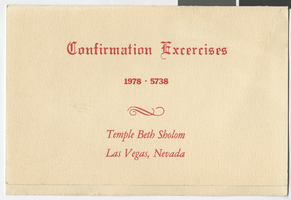
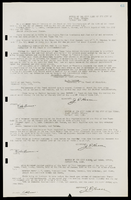
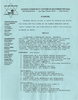
Jewish Community Center of Southern Nevada, item 02
Jewish Community Center of Southern Nevada's purpose, goals, and timetable statements.
Allison and Hugh Wallace oral history interview
Oral history interview with Allison and Hugh Wallace conducted by Claytee D. White on March 17, 2006 for the Hurricane Katrina Survivors in Las Vegas Oral History Project. In this interview, the Wallaces relate their upbringing, families, and educational attainments. Later, they talk about their experiences with Hurricane Katrina, evacuating and then returning to find their neighborhood overrun with looters and their home severely damaged by the flooding. They discuss the extreme difficulty they faced finding money and resources as they faced loss of employment, housing, and access to their bank accounts. They also describe the emergency relief efforts of various state, national, and federal agencies. Finally, they relate that these difficulties led to their decision to move to Las Vegas, Nevada and comment on the difficulty of maintaining contact with friends and colleagues who also left Louisiana.
Archival Collection
Meeting minutes for Consolidated Student Senate University of Nevada, Las Vegas, April 19, 1990
Text