
Search Results
Transcript of interview with Corinne Entratter Sidney by Claytee White, June 5, 2007
Interview with Corinne Entratter Sidney by Claytee White on June 5, 2007. In this interview, Sidney talks about growing up with privilege in California, where her father served as the attorney general. She attended school at UCLA and took acting classes and signed with United Artists. She met Jack Entratter in Los Angeles and moved to Las Vegas and worked as a Copa Girl. She discusses Jack Entratter's generosity and influence in town, and his style, and their lifestyle together. She mentions the likes of Frank Sinatra, Lena Horne and Sammy Davis, Jr. and her extravagant life living at the Sands. After Jack's death in 1971, she moved back to Los Angeles, returned to acting, and wrote a newspaper column. On a visit to Las Vegas with George Sidney after Sidney's wife Jane died, Corinne and George began dating and were married shortly after. They moved back to Las Vegas together for a slower pace. She describes her love of Las Vegas and its continued growth.
Corinne Sidney's life story makes for fascinating reading. She was born in 1937, the daughter of Alice Polk, former Ziegfeld showgirl, and Carl Kegley, an attorney. She attended U. of C. Berkeley, transferred to UCLA, and was spotted by a talent scout who convinced her to enter a Miss USA contest. Corinne's runner-up status in the Miss USA contest led to job offers in acting, so she decided to study acting. This, along with her childhood lessons in ballet, piano, singing, tap dance and horseback riding, led to a contract with United Artists, freelance work, television parts, and plays. Around the age of 18, Corinne met Jack Entratter. Their relationship brought her to Las Vegas, where she worked as a showgirl at the Sands for a few months, and where she married Jack a few years later. They lived a fabulous lifestyle which included travel, beautiful homes, and friendships with noted celebrities. Corinne went back to acting in Los Angeles after Jack passed away, but then segued into writing a gossip column and hosting a television show. She reconnected with an old friend (George Sidney) by writing the obituary for his wife, and within a few months they were married. The Sidney's moved back to Las Vegas, where Corinne still makes her home today.
Text
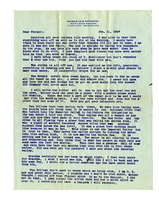
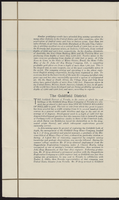
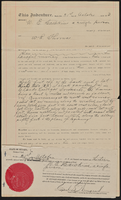
Helen J. Stewart real estate documents
Helen J. Stewart real estate documents
Text
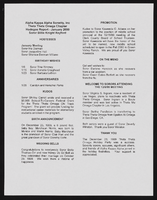
Alpha Kappa Alpha Sorority, Theta Theta Omega Chapter "Hodegos" reports
From the Alpha Kappa Alpha Sorority, Incorporated, Theta Theta Omega Chapter Records (MS-01014) -- Chapter records file.
Text
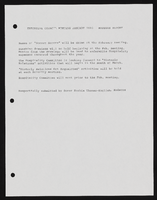
Alpha Kappa Alpha Sorority, Theta Theta Omega Chapter "Hodegos" reports
From the Alpha Kappa Alpha Sorority, Incorporated, Theta Theta Omega Chapter Records (MS-01014) -- Chapter records file.
Text
David Mondt and Curtis Jones oral history interview, 2025 June 16
Oral history interview with David Mondt and Curtis Jones conducted by Stefani Evans, Claytee White, and Bethany Dayton on June 16, 2025 for the Game On! An Oral History of Las Vegas Sports project. In this interview, Mondt and Jones discuss being part of the Las Vegas Gay Softball League. Mondt is the current Commissioner for the league, and Jones is a longtime player who has been inducted into the Hall of Fame for his performance and contributions. Mondt begins by telling about his early life in Missouri and Florida, attending college, and learning to love journalism. He eventually moved to Las Vegas in December 2004 to begin his career with local newspaper, the Las Vegas Sun. Jones then recalls his childhood, and moving frequently because his father was in the military. During his senior year of high school, the family again relocated to Las Vegas, and his family arrived in August 1972. He attended UNLV and received a Bachelors in Early Childhood Education and a Masters in Educational Administration. Both then discuss the founding of the Las Vegas Gay Softball League (LVGSL). Mondt discusses how his introduction into softball was aided by Jones being an incredible coach. The LVGSL continues to grow, and the league has had many players make it to national championships and the Hall of Fame. Both describe their hope to make a place that is inclusive and lets players feel free to truly be themselves. Digital audio available, no transcript available.
Collection Name: Game On! The Oral History of Las Vegas Sports Interviews
Box/Folder: Digital File 00
Archival Component

Transcript of interview with Jimmy Wike by David Schwartz, June 02, 2015
Text

Transcript of interview with Samuel and Sherrill Coleman by Claytee White, February 12, 2016 and February 22, 2016
Sherrill and Samuel Coleman moved to Las Vegas during the 1990s after both enjoying a full life and numerous careers in other parts of the United States. They met each other through church in 1998 and married each other in April 1999. Now retired, both Samuel and Sherrill remain active in their church community. Samuel Coleman was born in Durant, Mississippi in 1928 to a sharecropping family. His father died when he was 13 months old, leaving his mother to raise seven children by herself. Over time, his family slowly migrated to Chicago and he joined them when he was 15. For eight months, Samuel worked a number of different jobs until he began to work for Burlington Railroad as a four cook. The United States Army drafted him in 1951 and sent him overseas to work in a motor pool for a military hospital in Korea, despite his status as a conscientious objector. At war’s end, he returned to work for Burlington. During his last 17 years with the railroad, Samuel successfully petitioned to join the Brotherhood of Sleeping Car Porters, the union for railroad cooks, porters, and waiters, to improve the working and sleeping conditions at Burlington Railroad. He retired from the railroads in the 1970s and chose to pursue other careers. Until his official retirement in 1993, Samuel worked in real estate, as the owner of a liquor store, a firefighter, a restaurant inspector, and a deacon for his church. His daughter from his first wife moved to Vegas to pursue a career as a teacher and after a number of visits, Samuel decided to follow her in 1999. Sherrill Coleman was born in Newton, Kansas in 1941. Like many other African American women in her community, she worked as a housekeeper for a number of years. She and her first husband moved to Los Angeles County in 1964 where she took a temporary job in the elections department of the local government. In 1967, Sherrill became a file clerk for Los Angeles County’s Department of Public Social Services. By the time she left the department, she was middle management in the auditing department. She moved to Vegas in 1993.
Text