
Search Results
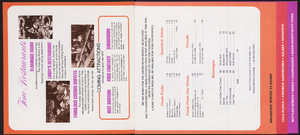
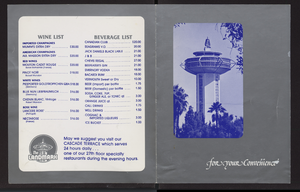
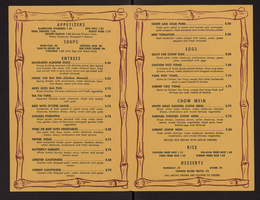
Grace Hayes Photograph Collection
The Grace Hayes Photograph Collection consists of black-and-white photographic prints and negatives from approximately 1890 to 1980. The collection includes personal photographs of Hayes and her son Peter Lind Hayes and publicity photographs from Hayes's entertainment career.
Archival Collection
Jess Mack Papers
The Jess Mack Papers document the professional life of burlesque agent and comedy writer Jess Mack from 1916 to 1988 in Las Vegas, Nevada. In addition to contracts, correspondence, engagements, and newspaper articles, the collection contains five boxes of jokes, scripts and scenes used in various burlesque productions. Other material includes photographs of entertainers and burlesque stars, joke booklets, and issues of Mack's magazine, Cavalcade of Burlesque, dating from 1951 to 1954.
Archival Collection
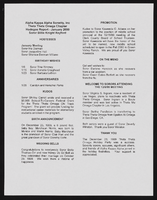
Alpha Kappa Alpha Sorority, Theta Theta Omega Chapter "Hodegos" reports
From the Alpha Kappa Alpha Sorority, Incorporated, Theta Theta Omega Chapter Records (MS-01014) -- Chapter records file.
Text

Transcript of interview with Adelaide Robbins by Lisa Gioia-Acres, April 18, 2008
Adelaide was born in Manhattan, New York to a father who was a pianist and arranger and a mother who was a dancer on Broadway. She grew up as an only child in the theater district where she was exposed to the arts from a young age. Her parents insisted she be well rounded. To that end, she began piano lessons at age six and was frequently taken to museums. Adelaide was always drawn to music and began working professionally by the age of 12. She attended the High School of Music and Art for four years along with others who went on to great fame. While in high school, she earned awards for composition. Her knowledge and abilities of the bass earned her a full scholarship to the Eastman School of Music. All of the jobs she had during high school and college were music related; playing gigs or teaching. While working towards a triple major at Eastman, she felt over-extended and eventually transferred to the Manhattan School of Music who was honored to have a transfer from Eastman. Also because of the extra credits from Eastman, she was able to obtain a master’s degree inside of a year. Adelaide went on the road with Buddy Rich’s band where they played in Chicago and Los Angeles before finding their way to Las Vegas. Adelaide was always the only woman in the band, and there were difficulties of being a woman in the field of mostly male musicians. The band found their way to Las Vegas in 1967. She never realized how well known she was until she arrived in Las Vegas. Adelaide came to Las Vegas on a trial run and ended up staying. The first job she had in Las Vegas was playing solo piano at Guys and Dolls before moving on to playing as a rehearsal pianist for a Broadway show. Over the years, Adelaide played many venues with many famous musicians. She is not hopeful for the future of musicians in Las Vegas, feeling the casino owners would rather replace live musicians with canned music. However, Adelaide’s career is not over as she is still performing for a variety of events. With her two degrees from very prominent music schools, Adelaide feels she may have gone further in career if she had stayed in New York, but she has no regrets about coming to Las Vegas.
Text
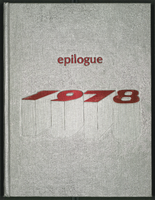
Epilogue: UNLV Yearbook, 1978
Yearbook main highlights: schools and departments; detailed lists with names and headshots of faculty, administration and students; variety of photos from activities, festivals, campus life, and buildings; campus organizations such as sororities, fraternities and councils; beauty contest winners; college sports and featured athletes; and printed advertisements of local businesses; Institution name: University of Nevada, Las Vegas
Mixed Content
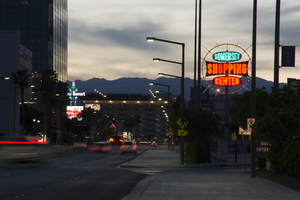
Photographs of Somerset Shopping Center sign, Las Vegas (Nev.), April 4, 2017
Site address: 252 Convention Center Dr
Sign owner: Somerset Shopping Center CO LP
Sign details: This shopping center was built in 1966 next to the Somerset House Motel. The motel was demolished in 2011; however, the shopping center is still around. Some businesses that reside in the shopping center include: a hair and nail salon, a dry cleaners, an Ethiopian restaurant, and a place for banquets to name a few.
Sign condition: 5, the sign is in beautiful condition.
Sign form: Pole
Sign-specific description: This pole sign sits close to the street so motorists and pedestrians can view it easily. A light blue pole holds up the main portion of this sign, as well as back lit plastic signs on each side of the pole that display what businesses are in the shopping center. The sign itself consists of a yellow ring that encircles three other signs. This yellow circle is covered in incandescent light bulbs that chase when the sign is lit up at night. Also, extending from this yellow circle are light blue poles in various lengths that are surrounded in neon tubes and oscillate around the yellow circle when the sign is lit up at night. In the center of the circle are three signs. The first sign is an elongated oval that has the word "SOMERSET" painted on it in bold white letters with a black outline on a light blue background. Neon tubes outline these letters. The sign under that is a large rectangle shape with each of the sides curving inward. There are also incandescent light bulbs lining the outer edge of this sign that chase when the sign is lit up. This sign has the word "SHOPPING" painted on it in bold white text against a red background. Neon tubes outline each letter of this word. The sign under this is another elongated oval that is a similar size to the "SOMERSET" sign. This sign reads "CENTER" in bold white text against a red background and neon tubes outline this word as well.
Sign - type of display: Neon, Incandescent light bulbs and back lit
Sign - media: Steel and plastic
Sign - non-neon treatments: Plastic portion of sign
Sign animation: Oscillating, chasing
Sign environment: The shopping center that this sign is located in is about a block away from the Strip and is near a few monumental properties. It resides close to the Las Vegas Country Club, the Las Vegas Convention Center, and the Guardian Angel Cathedral that Paul Revere Williams designed. It is down the road from casinos like the Wynn, Encore, Circus Circus, and the Westgate. The Peppermill, an iconic Las Vegas restaurant, is down the street as well. It was down the street from the Stardust when that property was up and running.
Sign manufacturer: YESCO
Sign - date of installation: Most likely 1966, 1960's era
Sign - thematic influences: The design of this sign is very eye-catching from the road, as are many roadside signs throughout this era of the city. Bold text and light animation make this a standout sign to attract motorists and pedestrians to the shopping center.
Sign - artistic significance: This sign appears to have some Googie design influence throughout it. It has a space age feel to it because of the yellow circle that surrounds the "SOMERSET SHOPPING CENTER" signs and the blue poles that extend from it also add to this style.
Survey - research locations: Assessor's Page http://www.clarkcountynv.gov/assessor/Pages/searchbybusinessname.aspx , Vintage Las Vegas website http://vintagelasvegas.com/search/somerset , Roadside architecture website http://www.roadarch.com/signs/nvvegas.html
Surveyor: Lauren Vaccaro
Survey - date completed: 2017-09-01
Sign keywords: Neon; Incandescent; Backlit; Steel; Plastic; Oscillating; Chasing; Pole sign
Mixed Content
Theresa Thomas interview, March 13, 1995: transcript
Thomas discusses her early life in Thistle, Utah before moving to Las Vegas, Nevada in approximately 1931, where her father worked on the Hoover Dam (Boulder Dam) construction. Thomas then talks about her early schooling in Boulder City, Nevada, her experiences as a swing and dance band musician, Block 16 in the Clark Las Vegas Townsite, and her memories of Las Vegas hotels and casinos. Other subjects Thomas covers include Las Vegas entertainers, entertainment venues, and women in the music industry during the 1930s.
Text